
Jal Seva Aankalan: A Comprehensive Guide for Competitive Exams
1. Introduction and Overview
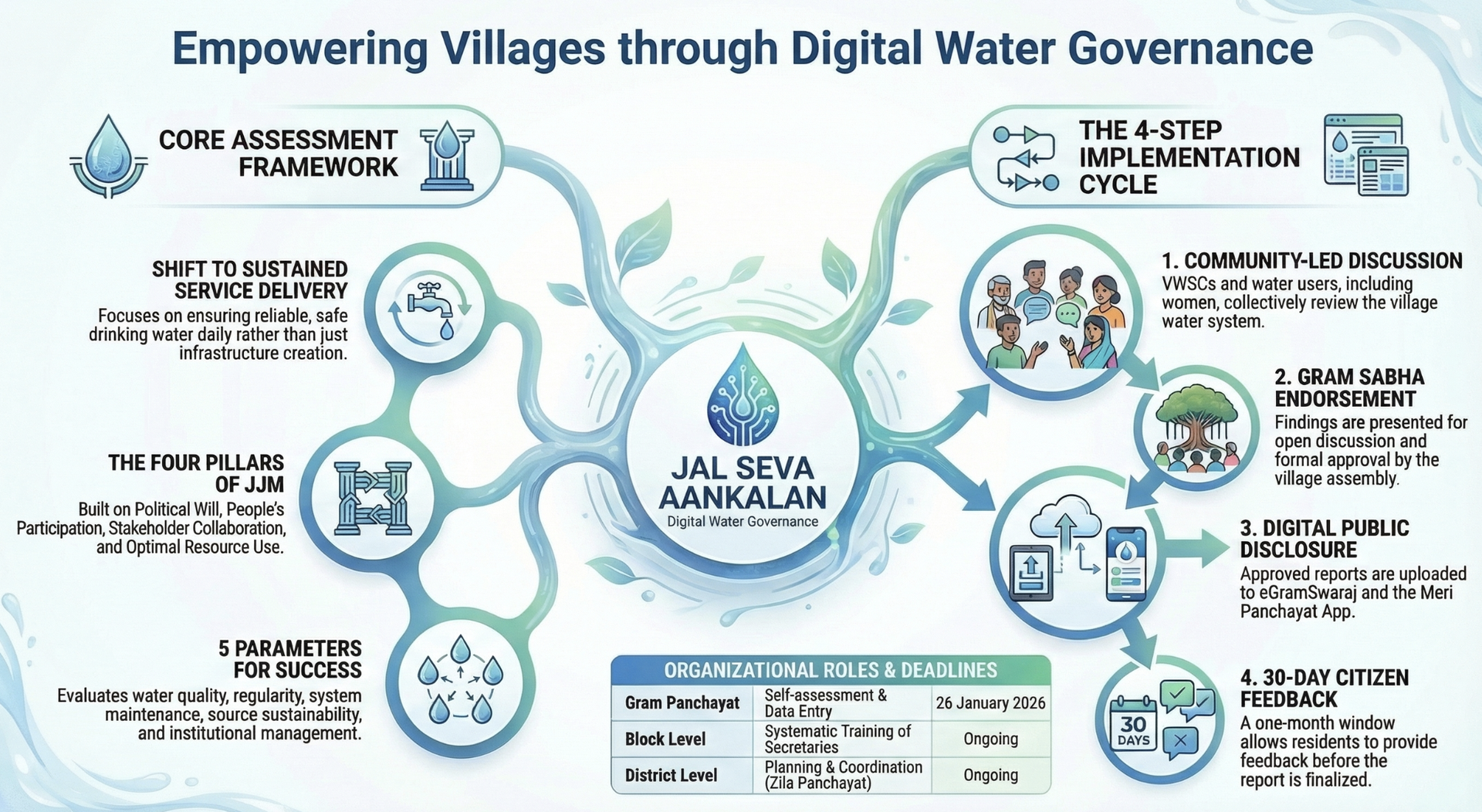
Launched in December 2025 by the Ministry of Jal Shakti (MoJS) through the Department of Drinking Water and Sanitation (DDWS), ‘Jal Seva Aankalan’ (JSA) is a Gram Panchayat-led digital functionality assessment tool hosted on the Jal Jeevan Mission (JJM) portal. This initiative marks a decisive shift in national policy from the mere creation of water infrastructure to the assurance of sustained service delivery by placing community-led monitoring at the centre of the governance framework.
2. Fact Sheet: Jal Seva Aankalan: Quick Reference
Field | Detail |
Launching Authority | Union Minister Shri C. R. Patil |
Implementation Target | All Har Ghar Jal (HGJ) Gram Panchayats |
Completion Deadline | 26 January 2026 |
Parent Mission | Jal Jeevan Mission (JJM) |
Primary Digital Platforms | JJM Dashboard, eGramSwaraj, and Meri Panchayat App |
Ministerial Constituencies | Shri C. R. Patil: Navsari (Gujarat); Shri V. Somanna: Tumakuru (Karnataka); Shri Raj Bhushan Choudhary: Muzaffarpur (Bihar) |
3. The Five Core Assessment Parameters
The JSA tool evaluates the functionality of drinking water services based on five high-yield service parameters:
- Regularity and adequacy of water supply: Monitoring daily delivery and volume.
- Drinking water quality: Ensuring the potability and safety of supplied water.
- Operation and maintenance (O&M): Assessing the upkeep of piped water systems.
- Source sustainability: Evaluating the long-term viability of water sources.
- Village-level institutional arrangements: Reviewing management by the Village Water & Sanitation Committee (VWSC).
4. Procedural Framework:
From Village to Portal The assessment follows a rigorous five-step digital and community-led workflow:
- Structured Discussions: Consultations involving the VWSC, Panchayat Secretary, and water users (including women and vulnerable groups).
- Gram Sabha Endorsement: Formal presentation of findings followed by a Gram Sabha resolution to ensure collective ownership.
- Digital Upload: Data entry into the JJM Panchayat Dashboard; notably, these inputs are publicly visible at the national level to ensure credibility.
- Citizen Feedback: A mandatory 30-day public feedback window remains open before data finalization.
- Administrative Access: Findings are accessed by District Collectors and Zila Panchayat CEOs to initiate evidence-based corrective actions.
5. Institutional Roles and Governance
Institutional Role Framework
Entity | Responsibilities |
District Level (Zila Panchayats) | Leading planning, coordination, and active facilitative roles. |
Block Level | Providing systematic training, specifically for Panchayat Secretaries regarding data entry. |
Gram Panchayat (GP) / VWSC | Primary custodians responsible for monitoring and community-led self-assessment. |
6. The Four Pillars of Jal Jeevan Mission (JJM)
Launched on August 15, 2019, the JJM aimed to provide 55 Litres Per Capita per Day (LPCD) through Functional Household Tap Connections (FHTC) to every rural household by 2024. The long-term sustainability of these assets is predicated on four strategic pillars:
- Political Will
- People’s Participation (Jan Bhagidari)
- Stakeholder Collaboration
- Optimal Resource Use
7. Expected Outcomes and Strategic Importance
The implementation of JSA is designed to transform rural water management through five key outcomes:
- Anchor drinking water assessments within democratic Gram Sabha deliberations.
- Enable early identification of operational, quality, and sustainability challenges.
- Improve transparency through the public disclosure of service performance data.
- Support evidence-based planning at both State and District levels.
- Reinforce community stewardship, moving from "government-owned" to "community-managed" systems.
8. Exam Focus: "Points to Remember"
High-Yield Revision Notes:
- Nodal Agency: MoJS (DDWS).
- The "Audit" Trap: JSA is specifically defined as a "community-led self-review process" and is neither an inspection nor an external audit.
- Service Standard: JJM target is 55 LPCD (Achievement goal: 2024).
- Case Study GPs: Ghonashi (Maharashtra), Gogathala (Rajasthan), and Bilhapur (Uttar Pradesh) were specifically highlighted during the national launch.
- Jan Bhagidari: Cited by the Union Minister as the "most crucial pillar" for the sustainability of Har Ghar Jalachievements.
- Digital Integration: Direct linkage with eGramSwaraj and the Meri Panchayat App ensures national-level data transparency.