
Introduction
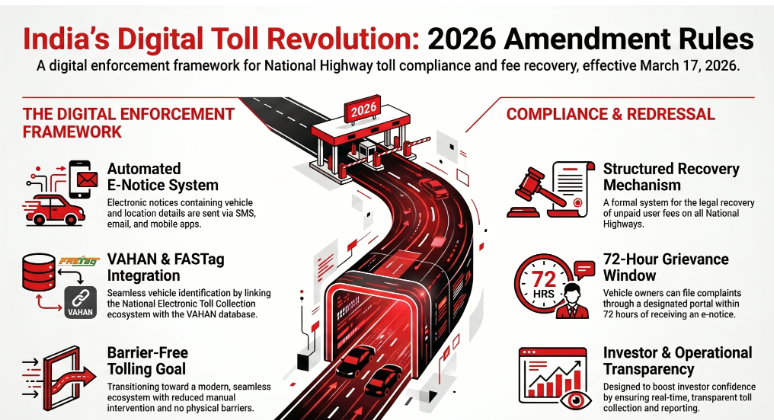
The National Highways Fee (Determination of Rates and Collection) (Second Amendment) Rules, 2026, officially came into effect on March 17, 2026. This legislative update establishes a technology-driven framework designed to modernize toll collection on India’s national highways. By integrating the National Electronic Toll Collection (FASTag) ecosystem with the VAHAN database, the rules introduce a formal structured recovery mechanism for unpaid fees and an automated e-notice system. The primary goal is to transition toward a barrier-free tolling environment that enhances transparency, reduces manual intervention, and fosters investor confidence in highway infrastructure.
Strategic Objectives
The 2026 amendment is driven by several key policy goals intended to refine the management and financial viability of national highway infrastructure:
Strengthening Compliance: Establishing rigorous digital enforcement to ensure the consistent collection of user fees.
Operational Transparency: Reducing manual processes to ensure real-time, efficient, and transparent operations.
Investor Confidence: Enhancing the reliability of revenue collection to attract and maintain investment in highway projects.
Technological Modernization: Supporting the long-term transition toward a seamless, barrier-free tolling ecosystem.
Key Features and Mechanisms
The amendment introduces several critical components to the existing tolling infrastructure:
1. Structured Recovery and Enforcement
The rules introduce a formal system specifically for the recovery of unpaid user fees. This marks a shift from manual enforcement to a structured, technology-led recovery process.
2. The E-Notice System
A core element of the new framework is the issuance of electronic notices to vehicle owners.
Content: E-notices include specific vehicle details, the date and location of the transaction, and the exact amount payable.
Delivery Channels: Notices are delivered through multiple digital touchpoints, including:
SMS and Email
Mobile applications
A dedicated online portal
3. Digital Integration and Vehicle Identification
To ensure seamless enforcement, the rules mandate the integration of two major digital ecosystems:
FASTag Ecosystem: The National Electronic Toll Collection system.
VAHAN Database: The central vehicle registry used for real-time vehicle identification.
Grievance Redressal and User Compliance
The framework includes provisions for vehicle owners and drivers to contest notices or address issues through a time-bound grievance mechanism:
Filing Window: Complaints must be filed within 72 hours of receiving an e-notice.
Designated Portal: A specific online portal has been established for the submission and management of these grievances.
Operational Impact
The implementation of the Second Amendment Rules is expected to significantly alter the highway user experience and administrative efficiency:
Feature | Impact of the 2026 Amendment |
Tolling Method | Move toward barrier-free, seamless digital collection. |
Manual Intervention | Reduced through automated vehicle identification and e-notices. |
Data Accuracy | Enhanced via the integration of FASTag and VAHAN databases. |
Collection Efficiency | Real-time recovery of unpaid fees through structured digital notices. |
Conclusion
The National Highways Fee (Second Amendment) Rules, 2026, represent a significant pivot toward a digital-first infrastructure management strategy. By codifying electronic enforcement and recovery, the rules aim to eliminate the inefficiencies of manual tolling while providing a transparent and legally structured environment for both highway users and infrastructure investors.