
Introduction
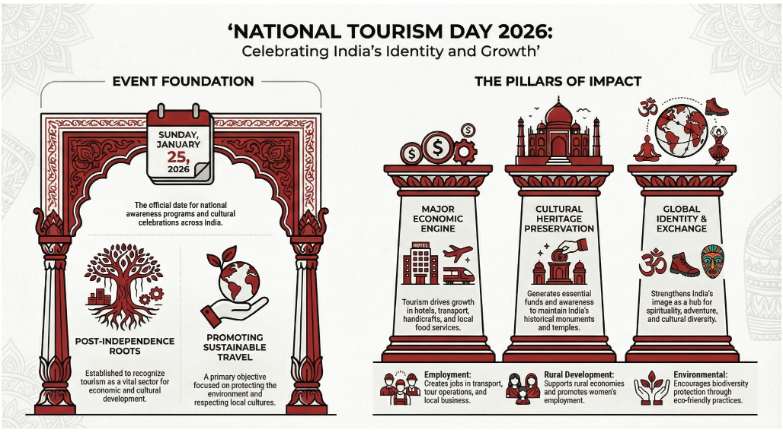
National Tourism Day is observed annually in India on January 25 to underscore the sector's vital role in national development. In 2026, the observance falls on a Sunday, serving as a pivotal platform to highlight tourism’s contributions to economic expansion, cultural preservation, and global diplomacy. Beyond leisure, the sector is positioned as a primary driver of employment and a tool for sustainable development. The 2026 initiatives focus on balancing growth with environmental conservation, promoting lesser-known domestic destinations, and fostering responsible travel practices to protect India’s diverse natural and cultural heritage for future generations.
Historical Context and Evolution
The strategic promotion of tourism in India originated in the post-independence era. During this period, the government identified tourism as a critical sector for both economic advancement and cultural enrichment.
Institutional Recognition: The sector's importance led to a concerted effort to showcase India’s historical monuments, wildlife, traditions, and natural landscapes to a global audience.
Establishment of the Observance: January 25 was designated as National Tourism Day to encourage citizens to appreciate the country’s travel potential and to advocate for a more organized and inclusive approach to tourism development.
Economic and Social Impact
Tourism serves as a cornerstone of the Indian economy, functioning as a significant source of income and job creation. The industry’s reach extends across multiple ancillary sectors, providing a livelihood for diverse communities.
Economic Value Chain
Tourism growth directly supports and stimulates various industries, including:
Hospitality and Services: Hotels and food services.
Logistics: Transport and tour operations.
Local Commerce: Handicrafts and small-scale local businesses.
Social and Community Benefits
Beyond financial metrics, tourism facilitates:
Rural Development: Supporting rural economies through localized travel.
Employment Equity: Promoting employment opportunities specifically for women.
Cultural Exchange: Fostering mutual respect and understanding between people of different regions and nations by showcasing India’s unique cuisine, languages, and festivals.
Preservation of Cultural Heritage and Global Identity
India’s global identity is deeply intertwined with its geographical and cultural diversity. National Tourism Day serves to reinforce India’s image as a destination for heritage, spirituality, and adventure.
Heritage Conservation: Tourism generates the necessary funds and public awareness required to preserve heritage sites, temples, forts, and traditional art forms.
Geographical Diversity: The sector promotes various landscapes, from the Himalayas and the deserts of Rajasthan to the beaches of Goa and the backwaters of Kerala.
Spiritual and Historical Landmarks: Destinations such as the Taj Mahal, Varanasi, and various wildlife sanctuaries remain central to attracting millions of international and domestic visitors.
Sustainability and Modern Objectives
A central theme for National Tourism Day 2026 is the integration of modern technology and sustainable practices. The goal is to achieve a "balanced approach" where development does not compromise environmental or community welfare.
Primary Objectives
Awareness: Spreading knowledge regarding the social and economic significance of travel.
Domestic Exploration: Encouraging citizens to visit lesser-known, emerging destinations within India.
Eco-friendly Practices: Promoting responsible tourism that respects local cultures and protects biodiversity.
Inclusive Growth: Supporting communities that rely exclusively on tourism for their livelihoods.
Role of Technology
Improved digital connectivity and technology have made travel more accessible, further magnifying the impact of tourism on the national economy and allowing for more efficient promotion of diverse experiences.
Framework for Celebration and Public Engagement
The observance involves a multi-faceted approach to public engagement, coordinated by tourism departments, educational institutions, and cultural organizations.
Activity Type | Description |
Cultural Programs | Exhibitions showcasing regional traditions, arts, and crafts. |
Educational Initiatives | Seminars, workshops, essay competitions, and quizzes focusing on sustainability. |
Awareness Campaigns | Programs encouraging responsible and eco-friendly exploration of India. |
Industry Events | Travel fairs and promotional events highlighting emerging destinations. |
Recognition | Awards for individuals and organizations contributing to the growth of the sector. |