Introduction
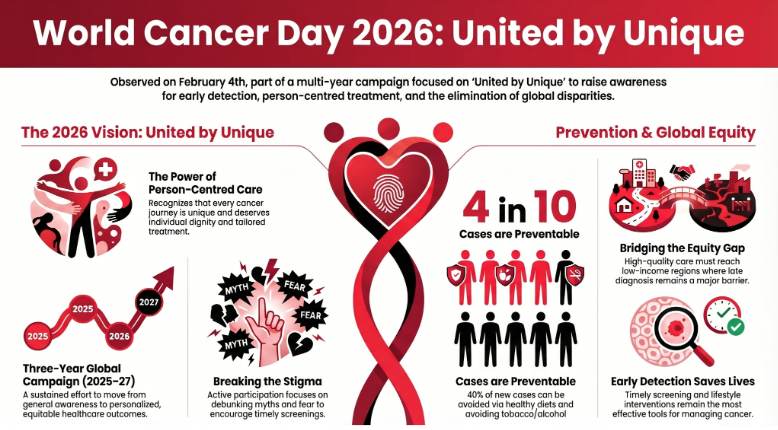
World Cancer Day 2026, observed on February 4, serves as a global focal point for raising awareness, promoting early detection, and advocating for equitable access to oncology care. The 2026 observance is centered on the theme “United by Unique,” which is the second year of a three-year global campaign (2025–2027). This theme prioritizes person-centered care, acknowledging that while every cancer journey is distinct, every individual deserves dignity and high-quality treatment. Key insights from the World Health Organization (WHO) indicate that 40% of cancer cases are preventable through lifestyle modifications. Consequently, the 2026 initiative emphasizes the intersection of prevention, early screening, and the removal of systemic barriers to care, particularly in low- and middle-income regions.
 The 2026 Theme: "United by Unique"
The 2026 theme is a critical component of a multi-year strategic framework running from 2025 to 2027. This theme shifts the focus toward the individual experience of the disease.
Person-Centered Care: The campaign stresses the necessity of recognizing individual needs and experiences throughout the treatment and survivorship process.
Dignity and Equality: It underscores the principle that all patients, regardless of their specific diagnosis or background, are equally deserving of care and dignity.
Survivorship Planning: Beyond immediate treatment, the theme advocates for comprehensive planning that accounts for the long-term journey of cancer survivors.
Core Objectives and Purpose
World Cancer Day 2026 aims to mobilize global action through several interconnected goals:
Awareness and Prevention: Educating the public on how to reduce cancer risks and the vital role of early detection.
Stigma Reduction: Actively working to break the myths, fears, and social stigmas often associated with a cancer diagnosis.
Screening Advocacy: Encouraging timely medical screenings and the adoption of healthy lifestyles to catch the disease in manageable stages.
Holistic Support: Providing a platform for supporting not just the patients, but also survivors and their caregivers.
Prevention and Lifestyle Interventions
A major takeaway from the 2026 briefing is the significant impact of preventative measures. Data from the World Health Organization (WHO) highlights the following:
Prevention Metric | Data Point |
Preventable Cases | 4 in 10 new cancer cases (40%) |
Primary Risk Factors | Tobacco use, unhealthy diets, alcohol consumption, and physical inactivity |
Early Intervention | Early detection through timely screening significantly improves survival rates and management outcomes |
Global Equity and Access Challenges
The observance brings critical attention to the disparities in cancer care worldwide. There is a concerted call for equitable access to high-quality care, specifically targeting the following issues:
Resource Disparities: Low- and middle-income countries often face a severe lack of resources, leading to significant gaps in care.
Late Diagnosis: A primary driver of poorer outcomes in these regions is the lack of awareness and screening infrastructure, which frequently results in late-stage diagnoses.
Systemic Action: Governments and health institutions are urged to improve access to ensure that geographical or economic status does not determine a patient's survival probability.
Participation and Advocacy
Engagement on World Cancer Day involves a diverse array of stakeholders, including individuals, community groups, health institutions, and governmental bodies.
Educational Programs: Implementation of programs designed to teach the public about risk-reducing measures.
Screening Activities: Organizing localized screening events to promote early detection.
Global Advocacy: Using awareness campaigns to pressure policymakers to prioritize cancer care and resource allocation.