
Introduction
On March 2, 2026, the Securities and Exchange Board of India (SEBI) issued a regulatory directive aimed at enhancing transparency and investor protection within digital financial communications. The mandate requires all SEBI-registered market intermediaries and their agents to prominently disclose their registered names and registration numbers when sharing securities market-related content on social media. This policy is designed to provide a clear distinction between authorized, regulated entities and unregistered financial influencers, thereby mitigating the risks associated with misinformation and fraudulent financial advice in the digital landscape.
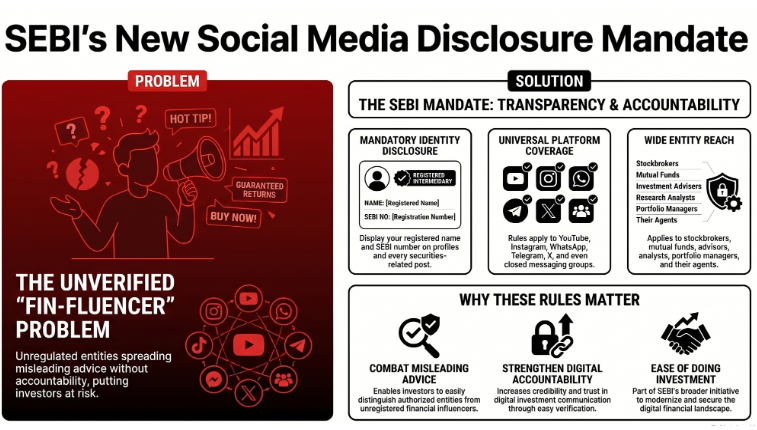
Overview of the Regulatory Directive
The SEBI circular establishes a formal requirement for transparency across all digital interactions involving the securities market. By requiring the explicit display of credentials, SEBI seeks to foster a more accountable digital ecosystem.
Core Objective
The primary aim of this mandate is to empower investors by providing a mechanism for the immediate verification of a content creator's regulatory status. This transparency is intended to build trust in digital investment communications and protect the public from misleading "finfluencer" content.
Scope of Application
The mandate is comprehensive, covering a wide array of financial entities and digital platforms to ensure there are no regulatory loopholes in digital communication.
Affected Entities and Agents
The directive applies to all SEBI-regulated entities and their associated distributors or agents, including:
Intermediaries: Stockbrokers, Mutual Funds, Investment Advisers, and Research Analysts.
Investment Managers: Portfolio Managers, Asset Management Companies (AMCs), and Alternative Investment Funds (AIFs).
Trusts and Vehicles: Real Estate Investment Trusts (REITs) and Infrastructure Investment Boards (InvITs).
Platform Coverage
The disclosure requirements apply across the entire spectrum of social media and messaging services, regardless of whether the groups are public or private.
Public Platforms: YouTube, Instagram, X (formerly Twitter), Facebook, LinkedIn, Reddit, and Threads.
Messaging and Groups: WhatsApp, Telegram, and other closed or semi-closed digital groups.
Compliance Requirements
Regulated entities must adhere to specific formatting and placement rules to ensure that their identity is unmistakable to the viewer.
Disclosure Placement
Profile Level: The registered name and SEBI registration number must be clearly displayed on the entity’s social media profiles.
Content Level: For every post or video related to the securities market, the registered identity and number must appear at the beginning of the content.
Handling Multiple Registrations
For entities holding more than one SEBI registration (e.g., an entity that is both a stockbroker and an investment adviser), the following rules apply:
Individual Posts: Only the registration details relevant to the specific content being shared are required.
Comprehensive Listing: Entities must provide a web link on their social media profiles that lists all their various SEBI registrations for full transparency.
Strategic Significance and Market Impact
This regulatory shift is a component of SEBI’s broader "Ease of Doing Investment" initiative and carries significant weight for market governance.
Feature | Impact on the Financial Ecosystem |
Investor Protection | Enables easy verification of credentials, reducing the likelihood of investors following fake or unauthorized financial advice. |
Misinformation Reduction | Discourages the spread of unverified claims by holding registered entities accountable for their digital output. |
Market Transparency | Standardizes how regulated information is presented, strengthening the credibility of the Indian capital markets. |
Regulatory Accountability | Simplifies the oversight of digital communications, ensuring that intermediaries operate within the legal framework even on third-party platforms. |
Conclusion
The SEBI mandate for social media disclosure represents a proactive step in modernizing financial regulation for the digital age. By forcing the integration of regulatory credentials into social media content, SEBI is addressing the rise of unregistered financial influencers and ensuring that investors have the tools necessary to identify authorized, professional advice. This move is expected to enhance the overall integrity of the Indian economy and the financial sector's regulatory governance.