
Introduction
The White-Rumped Vulture (Gyps bengalensis), also known as the Indian White-backed or Oriental White-backed Vulture, is a critically endangered species of Old World vulture. Native to South and Southeast Asia, the species has experienced a catastrophic population decline primarily due to the use of diclofenac in livestock. A recent rescue incident in Kerala, India, underscores the ongoing vulnerability of the species and the continued need for conservation intervention. This document provides an overview of the species' characteristics, geographic distribution, and the primary pharmacological threat to its survival.
Species Profile and Ecology
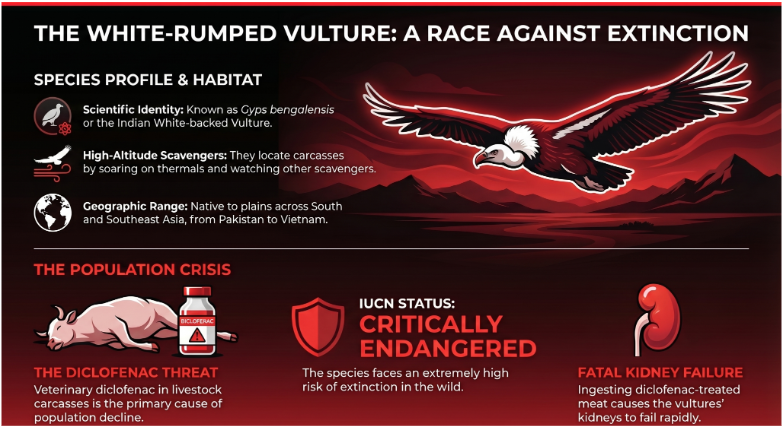
The White-Rumped Vulture is classified as a small Old World vulture. It plays a vital ecological role as a scavenger, providing essential sanitation services within its habitat.
Biological Characteristics
Scientific Classification: Gyps bengalensis.
Common Aliases: Indian White-backed Vulture and Oriental White-backed Vulture.
Foraging Behavior: The species feeds almost exclusively on carcasses. It utilizes thermals to soar at high altitudes, using its keen eyesight to locate food by spotting the activity of other scavengers on the ground.
Geographic Distribution and Habitat
The species is primarily found in the plains and has a wide distribution range across South and Southeast Asia, including:
South Asia: Pakistan, India, Bangladesh, Nepal, and Bhutan.
Southeast Asia: Myanmar (Burma), Thailand, Laos, Cambodia, and southern Vietnam.
Conservation Status and Threats
The White-Rumped Vulture is currently listed as Critically Endangered on the IUCN Red List. Its survival is threatened by specific environmental and pharmacological factors.
The Diclofenac Crisis
The most significant factor in the precipitous decline of the White-Rumped Vulture population is the veterinary use of diclofenac.
Source of Contamination: Diclofenac is a medicine administered to farm animals. Vultures are exposed to the drug when they consume the carcasses of livestock that were treated with the medication shortly before death.
Physiological Impact: The ingestion of diclofenac-tainted meat is toxic to the vultures, leading to acute kidney failure and subsequent death.
Recent Environmental Developments
Recent events in southern India have highlighted the ongoing struggle for the species' recovery. In February 2026, forest officials in Kerala conducted a rescue operation at Mampad, near Nilambur.
The operation involved a White-Rumped Vulture that was discovered in a severely weakened and grounded state. Such incidents serve as a critical reminder of the fragile status of the remaining population and the necessity for active monitoring and veterinary intervention in the wild.
Summary Data Table: White-Rumped Vulture at a Glance
Category | Details |
Scientific Name | Gyps bengalensis |
IUCN Status | Critically Endangered |
Primary Habitat | Plains of South and Southeast Asia |
Feeding Strategy | Carcass scavenging via thermal soaring |
Principal Threat | Diclofenac poisoning (Kidney failure) |
Recent Location | Mampad, Nilambur, Kerala (Rescue event) |